Ant colonies to brains: How complex systems rule the world
What do ant colonies, brains, social networks, and economies have in common? As it turns out, quite a lot. They are all examples of complex systems.
When Stephen Hawking was asked this question at the turn of the millennium: “Some say that while the 20th century was the century of physics, we are now entering the century of biology. What do you think of this?”
To which he replied: “I think the next century will be the century of complexity”.
This is no exaggeration. Most sciences have been fixated on narrow domains in specific fields, but something has been slowly unraveling over the last few decades. Besides the mathematical symmetry of subatomic particles, everything is made up of simple components arranged into more complicated systems. These complex arrangements and non-linear interactions result in emergent behavior that cannot be reduced to its constituent parts. The concept of “emergence” and its principles underlie everything from cells to cities.
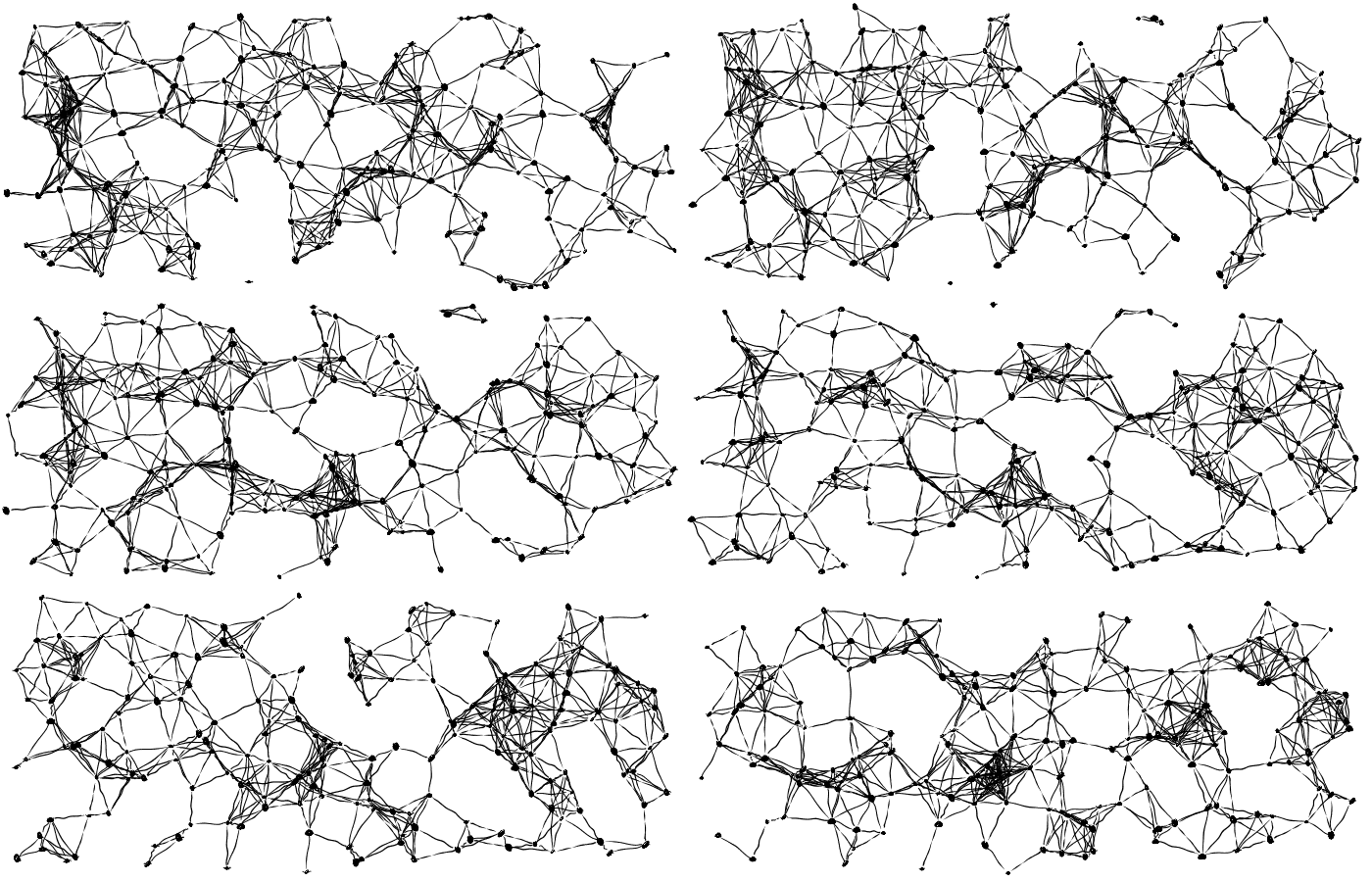
Complex systems dominate most of the phenomena we see today, yet most of us lack the basic vocabulary or concepts to comprehend them.
Here are some classic examples of complex adaptive systems.
Ant colonies: The intelligent superorganism
If you think about how an ant colony actually functions, it’s simply mind-boggling. Most people assume that there is some central command; ants are obeying instructions from a queen or a set of “leader” ants that would relay instructions. But this is not the case. The queen’s only responsibility is to lay eggs. There is no leader, no true queen that guides them. All the ants ever do is follow a very simple set of rules, receive signal A and do this, sense signal B then follow and lay signal C. Every ant is a blind cog in the machine, unaware of its very participation in a grand scheme.
Yet somehow, put enough ants together with simple rules of interactions through chemical signals, and they are able to create vast underground networks, intricately connected tunnels with storage rooms and nurseries, in thermally regulated architectures that can put human engineers to shame.
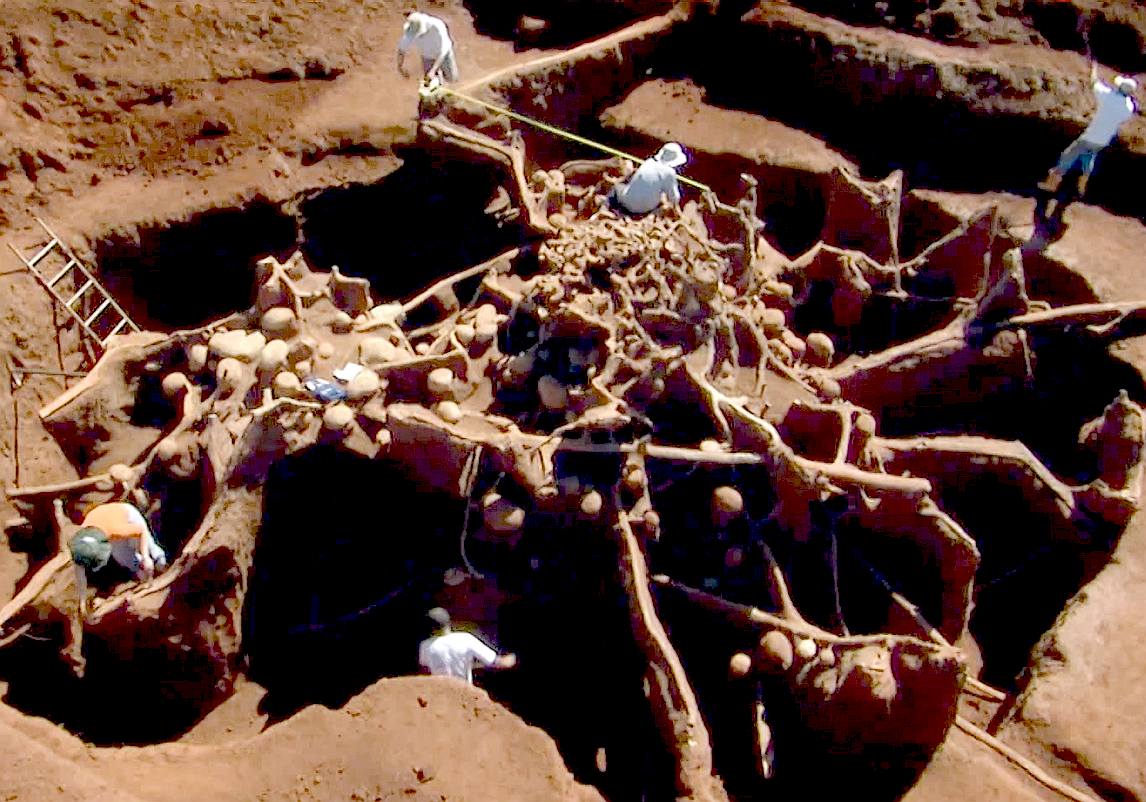
10 tons of cements poured in to reveal the intricate network of tunnels
It’s not just the incredible structures they create, but the collective intelligence they exhibit. By laying pheromones to food trails they are able to find algorithmically optimal solutions to the fastest routes (known as the traveling salesmen problem in computer science). They are able to create and maintain supply chains, forage efficiently, construct bridges, farm leaves in fungus chambers, stock food, migrate their colony - essentially developing an entire complex economy without a grand architect or designer. It’s a feat unimaginable to humans without a central command, but by obeying these simple rules, ants in large numbers behave as an intelligent superorganism. This is the beauty and mystery of complex adaptive systems.
Brains: Dumb neurons producing intelligence
The brain is wider than the sky
For put them side by side
The one the other will contain
With ease and you besideEmily Dickinson
The human brain is the most complex object known to mankind. This two kilogram, jelly-like mass of organic material, small enough to hold in your hands, is able to generate the entire universe of human experiences. From heartbreaks to astrophysics, every logical thought and irrational passion is constructed from the staggeringly complex activity of the brain.
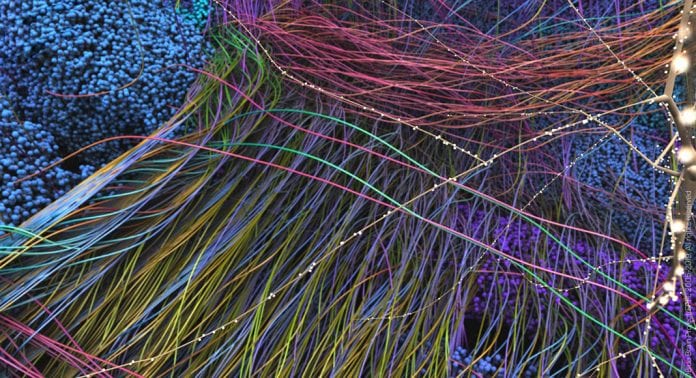
Neuronal connections: Blue brain project
Your brain is made out of these wire-like cells called neurons. Each neuron acts as a single informational node. You can treat it as a simple logic gate that takes certain inputs and passes down it’s output to the next set of neurons. Each one of them connects to another thousand on average. Put 100 billion of them together in an intricate network, and something remarkable happens. Each neuron still does the same thing, it fires a biochemical signal to the next neuron, and the next neuron does the same. Yet somehow, in the lightning storm of trillions of neurons firing, consciousness emerges. Every thought, action, belief, desire, and experience of pain or pleasure is a result of these interactions.
Is a single neuron intelligent or conscious? Given the relatively simple information processing nature of the cell, it’s unlikely that we can ascribe any conscious behavior to a single neuron. But the dynamics of neural networks somehow create intelligent processing, even though each neuron (or node) within the network is unintelligent. Intelligence itself is an emergent phenomenon of this complex adaptive system. If this leaves you feeling uneasy, you’re not alone. Consciousness is one of the biggest mysteries of neuroscience and remains one of the fundamental unsolved questions of reality.
Immune systems
There are many types of immune cells in the body that interact in an immensely interdependent, self-sufficient network capable of destroying invaders efficiently. B cells, for example, have the remarkable property of reproducing themselves at higher rates when there’s a match to the invader. Each daughter cell reproduced by the B cell varies slightly, and this results in a Darwinian evolution type dynamics that lead to the survival of better-matched B cells. This eventually leads to a more efficient seek and destroy mechanism without a central command.
Economies
In an market, the basic component is a human being. Every buyer and seller acts within their own self-interest, creating a web of transactions. Although each interaction is simple and easily defined, the totality of transactions creates a collective behavior with outcomes that are impossible to predict. In this chaos of interactions, emergent properties arise from the system, such as the “invisible hand” that guides the market to equilibrium prices.
Complex systems
Now that you have a taste of what complex systems are, it’s time to formally describe what a complex system is. First of all, we are not dealing with very complicated systems that have linear interactions and fixed outputs. Take a computer, for example - it’s extremely complicated and has many parts, but in principle, a computer is centrally and predictably controlled - it will always produce the same output given the inputs. It’s nonadaptive and doesn’t produce “emergent behavior”.
A complex adaptive system, on the other hand, is a system where a large network of simple components interact with non-linear dynamics and without a central control to produce emergent phenomena and self-organizing behaviour.
Let’s break down some of the terms.
Network: Components (or nodes) are causally linked to each other and are able to influence neighbouring units.
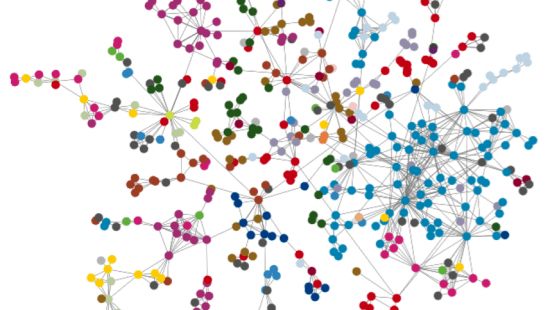
Example of a network where the dots represent nodes and lines represent connections
Non-linear: In a linear system, you can add parts to get a whole. Add one cup of water with 2 cups and you have 3. In a non-linear system, the output can be greater than the whole. Add two rabbits together and you can get a dozen.
Dynamics: How the state of the system changes over time and is influenced by the previous state.
Emergent phenomena: Behavior or phenomena that cannot be broken down to its constituent components and can only appear as a whole. A very simple example is “wetness”. A single h2o molecule has no such property, but lump enough together and a new property of wetness emerges that cannot be reduced to single molecules. When many simple units combine, a new behaviour “emerges” from the aggregate interactions. More complex examples are the intelligent behaviour from ant colonies and the appearance of consciousness in brains.
Self-organizing: The system is able to arrange itself without any central command dictating it’s organization. Markets are an example, where the individual incentives and transactions lead to optimal pricing.
Adaptive: The system is able to process information and improve their odds of replication or success. This is usually accomplished through learning or natural selection.
The key point is this, when these simple units aggregate, they create emergent behaviour that cannot be explained through reductionism. New and interesting behaviours “emerge” as a result of these non-linear and complex interactions. But these very properties make it extremely difficult, or virtually impossible, to make predictions of these systems.
Additional phenomena from complex systems
Let chaos reign
You may have come across the butterfly effect in pop culture, where a butterfly that flaps its wings in Tokyo causes a tornado in Tennessee. Simply put, chaos theory states that certain systems are highly sensitive to initial conditions. This means that incredibly small deviations lead to massive effects down the line, making predictions almost impossible. The effect makes weather forecasting an enormously difficult task. It is impossible to sample and track the movement of every single air molecule. Even if we had unlimited computing power to calculate the movement of every air molecule, small perturbations will be amplified over time to make the predication wildly inaccurate. Butterfly wing flaps become hurricanes.
Forecasting macroeconomic conditions and stock market prices is also notoriously difficult. The global economy is a gigantic network consisting of many interacting subsystems, aggregated through millions of transactions with varying inputs and outputs. While it’s possible to capture underlying microeconomic principles and trends, the sheer number of nodes, coupled with non-linear dynamics, makes it impossible for any single model to effectively capture the totality of information and risk in the system. Making predictions about the economic state one year into the future is largely a futile enterprise. Beware of certainty of outcomes in any complex system; it is a dangerous illusion.
Power laws
We are used to a world that’s determined by averages and central tendency, which means that values of a population tend to cluster around the average and large deviations are rare. We are intuitively tuned to expect results in normal distributions. After all, things like heights, blood pressure, IQ, all naturally form normal distributions. This is only the case when the events are independent - your height doesn’t effect my height. There tends to be an average somewhere in the middle and extreme heights become less likely.
However, there’s another distribution that dominates the modern world: Power law distributions. This happens when events are not independent but causally linked. You see this in book sales, website popularity, company valuations, city sizes, and many others.
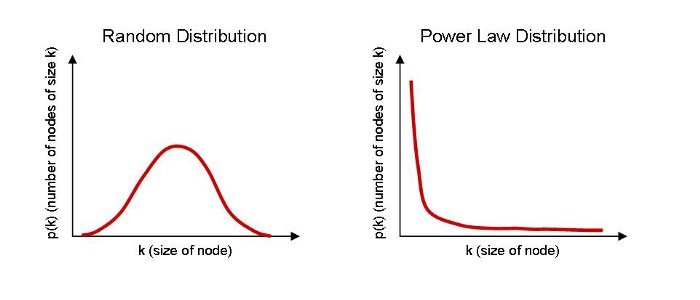
Popular songs get more notice, causing more people to listen. Companies that are more valuable can earn more money and get even higher valuations. High traffic websites get ranked higher on search engines and get even more visits. Popular nodes in a social network are more likely to gain even more nodes. Rich get richer. More begets more. In most complex systems, populations do not center around an average, they explode towards the edge. The popular minority dominates while the majority get by meagrely.
The interconnected dynamics of networks usually results in power-law distributions. Highly connected nodes become attractors, strengthening connections and forming even more connections in a positive feedback loop. In our modern world, most of our reality is networked. Organizations, epidemics, business connections, politics, and even relationships are networks. It’s no surprise that power laws are ubiquitous.
Optimization, redundancy, and signal cascading failures
Optimization is mostly thought of as a positive thing. It usually means that resources are utilized efficiently and links are interconnected in a precise manner, causing information to flow through the shortest paths. However, over-optimization creates fragile systems, often leading to catastrophic results.
On the flip side, redundancy is usually associated with wastefulness and inefficient usage of resources. In reality, resilient systems love redundancy and hate over-optimization. There is a constant trade-off between these two functions, battling the efficient use of resources and preventing fragility.
Kill a dozen ants in a large colony or collapse significant portions of their tunnels, and an ant colony would likely survive. Get infected by a virus, and a healthy body (a complex system in itself) would likely build immunity to future similar strains. If you exert a stressor on your body, through exercise or by eating certain phytochemicals in vegetables, your body produces a hormetic response. This means it overcompensates and creates extra capacity (a form of redundancy), increasing the anti-fragility and resilience in the system. Because environments are naturally volatile and unpredictable, most naturally occurring complex adaptive systems have evolved with this trait out of necessity. They are able to “learn” and introduce redundancy at the expense of some resources.
Banks, supply chains, and power grids fall on the other end of the spectrum. These systems are usually highly optimized with very little slack in the system. They are designed this way because we engineer incentives to do things at the lowest cost possible. This results in cutting away components that are redundant to reduce the cost on time, energy, or information. We try to minimize the total expenditure of the network in supply chains by introducing just-in-time inventory and lean logistics, and reduce the cost of energy transmission and cabling in electrical grid paths by formulating the most efficient routes.
Because certain nodes in this network have a high clustering (connected to many other nodes), a failure of a specific node can spread rapidly to other nodes. This is otherwise known as a cascading failure. Introducing constraints and having a tight coupling of nodes increases the likelihood of these breakpoints existing. A resulting failure in one node cascades across the network quickly.
The components can also be highly leveraged, which means that a failure in one component has strong non-linear effects on other components. This leads to a massive amplification of effects that cascade to other nodes in the system. Banks that fail don’t just affect immediate repayments and capital flow, their leveraged debt blows up across the system. One collapse of an institution to affect other institutions in a complex financial web of interactions. The probabilities of a blow-up risk are thus hidden in this complicated myriad of interdependencies. Black swan events become regularities.
The more decentralized the economy or system, with less over-leveraged and hyper-connected nodes, the more resilient it will be to network failures. Biological systems are a perfect example of systems that have strong built-in redundancy, minimizing the effects of catastrophic failures and even demonstrating anti-fragile properties through hormesis.
End
Without an understanding of complex systems and networks, much of our modern reality would be impossible to describe. Here’s a recap of the main points.
1. Simple units can interact to form emergent behaviour. They can only be understood holistically and is irreducible to it’s simpler parts.
2. Because of non-linear interactions leading to chaos dynamics, much of this behavior is unpredictable.
3. There are still certain regularities that can appear, such as power-law distributions.